
Breaking Down Casino Login Methods

Accessing an online casino account in Poland has evolved far beyond a simple username and password https://pinco.edu.pl/login/. Operators including Pinco Casino now provide a range of authentication mechanisms designed to balance user convenience with stringent security requirements. The login page acts as the critical gateway where identity verification, data encryption, and regulatory compliance meet. For Polish players, comprehending these methods is not just about ease of entry; it is about safeguarding personal information and funds in a market controlled by the Ministry of Finance and the amended Gambling Act. Each login technique carries distinct technical implications, from session token management to multi-layered credential checks, and a clear understanding of these options empowers users to make informed choices about their digital safety.
Security Guidelines for Casino Login Procedures
Beyond the various login methods offered by Pinco Casino, Polish players should follow a set of security measures that safeguard their accounts from common threats. The human factor remains the weakest link in any authentication chain, and social engineering attacks specifically target users who may not recognize the warning signs. Using unique passwords, enabling all available 2FA options, and monitoring account activity regularly form the foundation of a secure gaming experience. Players should also be aware of the devices and networks they use to log in, avoiding public Wi-Fi without a VPN. A proactive stance on security guarantees that the technical safeguards built into the casino’s login system work as intended without being undermined by careless behavior.
Recognizing Phishing Scams
Phishing campaigns targeting Polish casino players often involve emails or SMS messages that imitate official Pinco Casino communications, urging recipients to click a link and log in. These fraudulent pages are built to capture credentials and 2FA codes in real time. Legitimate casino messages will never ask for a password or a one-time code via email. Players should always check the URL in the browser address bar, ensuring it begins with the correct domain and displays a valid TLS certificate. Bookmarking the official login page and using it exclusively erases the risk of following a malicious link. Reporting suspicious messages to the casino’s security team helps protect the wider community and allows the platform to take down phishing infrastructure quickly.
Managing Session Timeouts and Device Memory
Pinco Casino employs session management features that automatically log out inactive users after a period of idleness, decreasing the window of opportunity for unauthorized access on shared or unattended devices. The “remember this device” option places a persistent cookie that skips 2FA on subsequent logins from the same browser, exchanging some security for convenience. Polish players should only enable this feature on personal, password-protected devices. Clearing browser cookies periodically invalidates these remembered tokens and forces a full re-authentication. If a device is lost or stolen, the account dashboard provides an option to remotely terminate all active sessions, instantly logging out any device that may have been compromised and securing the account balance.
Identity Verification and Regulatory Compliance in Poland
Before any sign-in method grants complete access to withdrawals and all gaming features, Poland’s legislation mandates a KYC process. Pinco Casino must authenticate the identity, age, and address of each player to comply with anti-money laundering regulations and the Polish Gambling Act. This verification is directly connected with the login system; an account may be opened and accessed, but its capabilities remains limited until the KYC checks are finished. The process typically involves uploading a scan of a state-issued ID, a proof of address document, and occasionally a selfie for liveness detection. Once verified, the account status is permanently linked to the login credentials, and any subsequent change in personal details activates a re-verification workflow.
File Submission and Identity Checks
During the sign-up process at Pinco Casino, Polish players are prompted to submit a clear photo of their dowód osobisty or passport. The platform utilizes automated optical character recognition to extract the name, date of birth, and document number, cross-referencing this data against sanctions lists and PEP databases. Manual review by a compliance team takes place if the automated check flags any discrepancy. The uploaded documents are encrypted at rest and transmitted over TLS, assuring that sensitive personal data remains protected. Players should verify the images are well-lit and all corners of the document are visible to avoid delays. A successful identity check links permanently the verified identity to the login account, stopping duplicate or fraudulent registrations.
Address Validation and Payment Method Confirmation
To fully activate a Pinco Casino account, a residential address in Poland must be verified. Acceptable documents include a current utility bill, bank statement, or official correspondence showing the player’s name and address, issued within the past three months. This step establishes the player’s jurisdiction and tax residency. Furthermore, when a payment method such as a credit card or e-wallet is linked, the casino can require a photo of the card with specific digits hidden or a screenshot of the e-wallet profile. This verification connects the financial instrument to the verified identity, stopping money laundering. Only after these checks are cleared does the login provide full transactional privileges, a process that usually finishes within twenty-four hours.
The Pinco Casino Login Experience
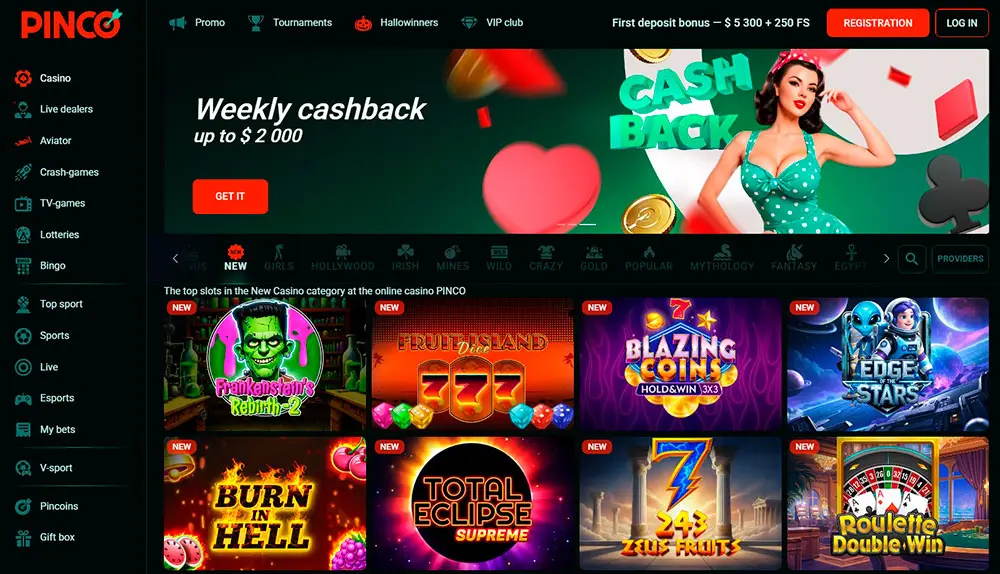
Pinco Casino has designed its login interface to guide Polish users through a smooth and safe entry process. From the first registration form to the dashboard after logging in, every step is built with clarity and compliance in mind. The layout responds to the user’s device, providing a responsive design that functions equally well on desktops and mobile browsers. Error notifications are precise and useful, specifying if a password is invalid or an account is locked after several failed attempts, without revealing whether the email address exists in the system. This attention to detail reduces frustration while maintaining a defensive posture against enumeration attacks. The complete interface is translated into Polish, ensuring that native speakers encounter no language barriers during critical security operations.
Step-by-Step Registration and First Login
A new player at Pinco Casino kicks off by clicking the registration button, which brings up a form requesting an email address, a password, and personal details such as full name and date of birth. After approving the terms and conditions and ensuring they are over eighteen, the system transmits the email verification link. Clicking it finishes the initial setup, and the player may sign in immediately with the chosen credentials. The first login triggers a prompt to set up two-factor authentication, although this can be delayed. The interface then leads the user to the KYC upload section, where identity documents can be provided. This sequential flow makes sure that no step is overlooked, and the account status is clearly displayed on the dashboard at all times.
Recovery Choices and User Assistance
If a Polish player forgets their password or is locked out of access to their 2FA device, Pinco Casino provides a structured recovery path. The “forgot password” link initiates an email with a reset token that is valid for a short period. For lost 2FA devices, the player is required to contact customer support and undergo a manual identity verification process, which can involve answering security questions and showing a photo holding their ID. The support team, accessible in Polish, reviews each case individually to block social engineering attacks. Once identity is confirmed, the 2FA is reset, and the player can set up a new device. This mix between self-service recovery and human intervention secures that legitimate users recover access without opening a loophole for attackers.
Two-Factor Authentication and Multi-Factor Authentication
Dual-factor authentication provides a critical extra layer past the password, demanding what the user knows and something the user possesses. In Pinco Casino, turning on 2FA implies that even when a attacker obtains the correct password, they will not be able to log in in the absence of the additional factor. This dramatically reduces the success rate of credential harvesting and password theft. The most typical applications use time-sensitive codes produced by an 2FA app or delivered via SMS. Multi-factor authentication can expand this to encompass inherence factors. As for Polish players who keep a account balance or have payment instruments attached, turning on 2FA represents one of the most efficient steps to prevent unapproved transactions and account hijacking, transforming the authentication process into a strong security checkpoint.
SMS-based and Authenticator App Codes
SMS-based 2FA delivers a digital code to the user’s associated mobile phone number, which is required on the Pinco Casino login page. While an improvement over no second factor, SMS codes are vulnerable to SIM swapping attacks and interception. A more protected alternative is a dedicated authenticator application such as Google Authenticator or Authy, which generates codes locally on the device using a shared secret and the current time. These codes update every thirty seconds and are independent of the mobile network. Polish users ought to store backup codes in a safe place when activating app-based 2FA, as misplacing the device without a recovery method can prevent access to the account. The casino offers these one-time recovery keys during the initial setup wizard.
Biometric Authentication on Mobile Devices
Modern smartphones popular in Poland offer fingerprint scanners and facial recognition systems that can serve as a biometric factor for casino logins. Pinco Casino’s mobile platform can integrate with the device’s native biometric APIs, allowing a player to authenticate with a touch or a glance after the initial password entry. The biometric data itself never leaves the device; the phone simply confirms a match to the stored template and sends a signed assertion to the app. This method provides high convenience and strong security, as biometrics are extremely difficult to replicate. However, it is tied to the specific hardware, and a factory reset will require re-enrollment. Biometric login works best as part of a multi-factor strategy rather than a standalone replacement for a password.
Social Platforms and Single Sign-On Implementations
SSO enables Polish players to log into Pinco Casino using present credentials from reliable third-party providers such as Google or Facebook. This method assigns authentication to an external identity provider, which issues a token validating the user’s identity without sharing the actual password with the casino platform. The technical backbone is typically OAuth 2.0 or OpenID Connect, protocols that grant limited access scopes. For the user, this eliminates the need to remember another password and accelerates the login process significantly. However, it also ties the casino account’s security to the integrity of the social media account. If the Google or Facebook profile is compromised, the attacker could conceivably gain entry to the linked Pinco Casino account, making the protection of that primary account critically important.
Linking Accounts Securely
When a Polish player decides to connect a social account to Pinco Casino, the platform starts a redirect to the provider’s authorization server. The user signs in there and authorizes for Pinco Casino to access basic profile information. The casino never sees the social media password; it obtains an access token and a refresh token. To maintain security, players should review the permissions requested and make sure they are comfortable with the data being shared. It is also advisable to turn on two-factor authentication on the social media account itself, establishing a layered defense. In the event of a token compromise, the damage is restricted because tokens have short lifespans and can be revoked from the provider’s security dashboard without influencing other services.
Data Protection Considerations
Utilizing social login introduces specific privacy issues under the European General Data Protection Regulation, which operates fully in Poland. Pinco Casino must transparently reveal what personal data it obtains from the identity provider and how that data is managed. Typically, only the email address, name, and profile picture are shared, but users should consult the privacy policy. The casino does not get access to friend lists or private messages. Polish data protection law, administered by the Urząd Ochrony Danych Osobowych, gives players the right to demand deletion of this data. Selecting social login can decrease the amount of personal information stored directly on the casino’s servers, as the authentication burden transfers to a third party with dedicated security teams.
Conventional Email and Password Authentication
The email and password combination remains the most widely used login method among Polish casino platforms, including Pinco Casino. This approach relies on a registered email address serving as the unique identifier, combined with a secret passphrase known solely to the user. The server keeps a salted hash of the password, not the plain text, and compares the submitted credential versus this hash during each login attempt. While common, this method’s security depends heavily on the strength of the chosen password and the user’s care in not reusing credentials among multiple services. Polish players must understand that brute-force attacks and credential stuffing are constant threats, making it vital to comprehend how to strengthen this basic authentication layer.
Setting Up a Strong Password
A robust password for a Pinco Casino account ought to exceed twelve characters and blend uppercase letters, lowercase letters, numbers, and special symbols in an random sequence. Refrain from using dictionary words, personal dates, or easily guessed patterns such as “Warszawa123!” which attackers can compromise within seconds using hybrid dictionary attacks. Password managers create and store complex strings, removing the cognitive burden from the user while ensuring each service has a separate credential. The login system at Pinco Casino imposes minimum complexity requirements and may decline passwords that appear in known breach databases. Polish users who devise a truly random passphrase dramatically reduce the risk of unauthorized access, as the time required to brute-force a long, high-entropy password reaches into centuries with current computing power.
The Function of Email Verification
Email verification serves as a primary safeguard when creating an account at Pinco Casino. Once you submit the enrollment form, the site sends a temporary, non-reusable verification link to the provided email address. This step confirms that the player owns the email account and creates a trustworthy line of communication for upcoming security alerts. In Poland, where email platforms like Onet, WP, and Gmail are common, players should verify their junk mail filters do not filter out these critical messages. The verification token is cryptographically signed and expires quickly, preventing replay attacks. After confirmation, the email serves as the anchor for password resets and critical account notifications, establishing it as a key element of the complete login framework.
Bezheslové Login Methods
Posun směrem k passwordless authentication is gaining traction, a Pinco Casino nabízí methods které odstraňují statické password entirely. Tyto metody rely na základě possession-based factors nebo biometrics pouze, snižující friction and odstraňující nebezpečí opětovného použití hesla. Magické odkazy and one-time passcodes odeslané to potvrzenému email or phone number umožňují a user to click na odkaz or vložit heslo pro získání instant access. Hardware security keys nabízejí alternativu, using physical devices které communicate přes USB or NFC. Polským hráčům znechuceným zapomenutými hesly, passwordless login nabízí a streamlined experience aniž by compromising security. Podložní cryptography garantuje aby each login session je unikátně autentizováno a nemůže být přehráno, díky čemuž je perspektivní solution.
Magic Links a One-Time Passcodes
Magický odkaz je jedinečnou, time-limited URL odeslanou na uživatelovy registered email address. Jeho rozkliknutím autentizuje sezení přímo bez nutnosti a password. Pinco Casino generuje these links pomocí kryptografickou jednorázovkou a stanovuje dobu platnosti několika minut. Podobně, a one-time passcode zaslané přes email nebo SMS lze napsat into přihlašovací formulář. Obě metody kontrolují control of the communication channel. Polish users by si měli být vědomi aby the security of this approach se přesouvá na the email or phone account; pokud je tato schránka compromised, útočník si může vyžádat a magic link a vstoupit. Proto, zabezpečení the associated email pomocí bezpečným heslem and 2FA je i nadále klíčové i když používáte passwordless casino login.
Fyzické bezpečnostní klíče
Hardware security keys compliant with FIDO2 i U2F standards represent the pinnacle odolné autentizace proti phishingu. Polský hráč může registrovat fyzický klíč, such as a YubiKey, k svého účtu v Pinco Casino. During login, platforma vyzývá od klíče, který vyžaduje fyzické stisknutí pro vygenerování kryptografický podpis. Tento klíč ukládá a private key jenž nikdy neopustí zařízení, and each response is bound s konkrétní doménou, bránící man-in-the-middle attacks. I sofistikovaná phishing site imitující Pinco Casino nemůže oklamat the key k odpovědi. I když tato metoda vyžaduje purchasing a device and carrying it, bezpečnostní přínosy jsou podstatné pro účty s vysokou hodnotou. Rozhraní pro přihlášení kasina podporuje několik klíčů as backups, aby byl přístup i nadále možný pokud je jeden klíč ztracen.
